

Today's PUZZLE CLASSIC OF THE DAY

PREVIOUS 12 DAYS
Kite: How Many Triangles?
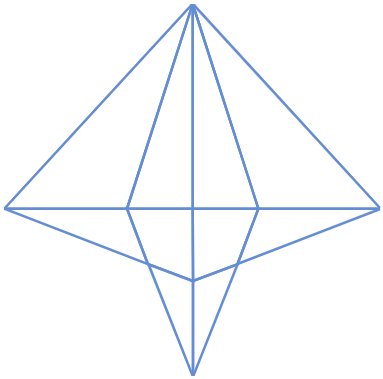
How many triangles (one or more segments) can you count in this image?
Four Brothers - Sum of Ages
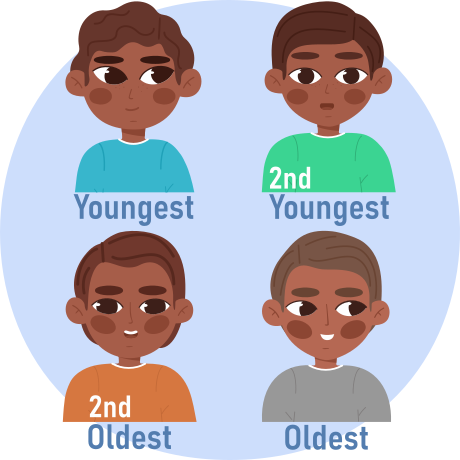
There are four brothers in a family. The sum of the ages of each combination of three brothers: 30, 32, 32, and 35. How old is the oldest brother?
Maximum Multiplication
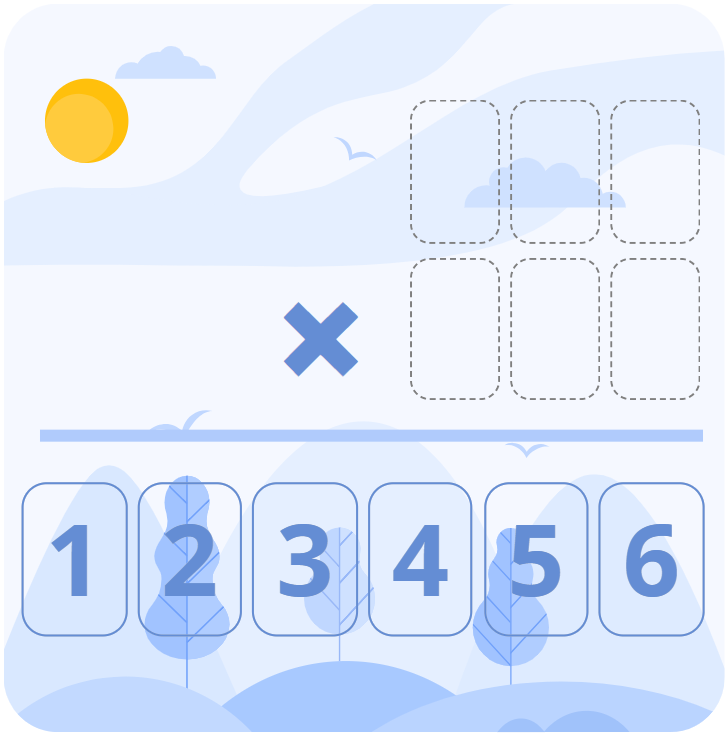
What is the largest number that can be made by multiplying two three-digit numbers together using each of the digits from 1 to 6 exactly once? Example: 134 × 256 = 34,304, though this is not the largest number that can be made. What is?
Guess the Number: 1 to 100
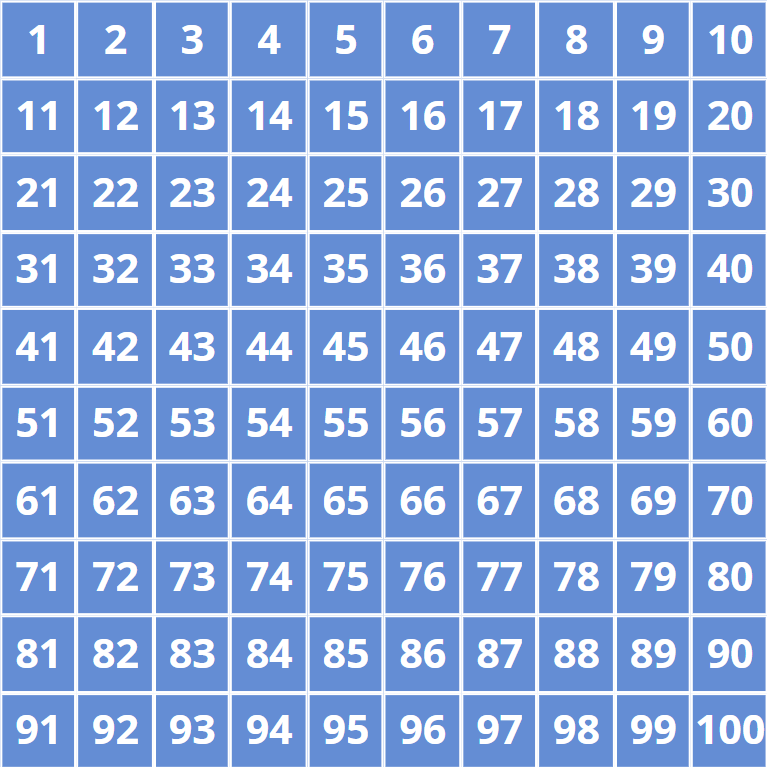
Turn off the numbers until you end up with only one number.
Behind Each Other

Sierra is standing behind Giselle. And Giselle is standing behind Sierra. This doesn't seem possible but it is. How?
Four 9's and a 1 to 100

Arrange four 9's and a 1, and ONLY ONE basic arithmetic operator (-, +, /, or x) into a mathematical expression with a result equal to 100. NOTE: All 5 numbers must be used (e.g. 99 + 1 is not valid).
Covering the Hole
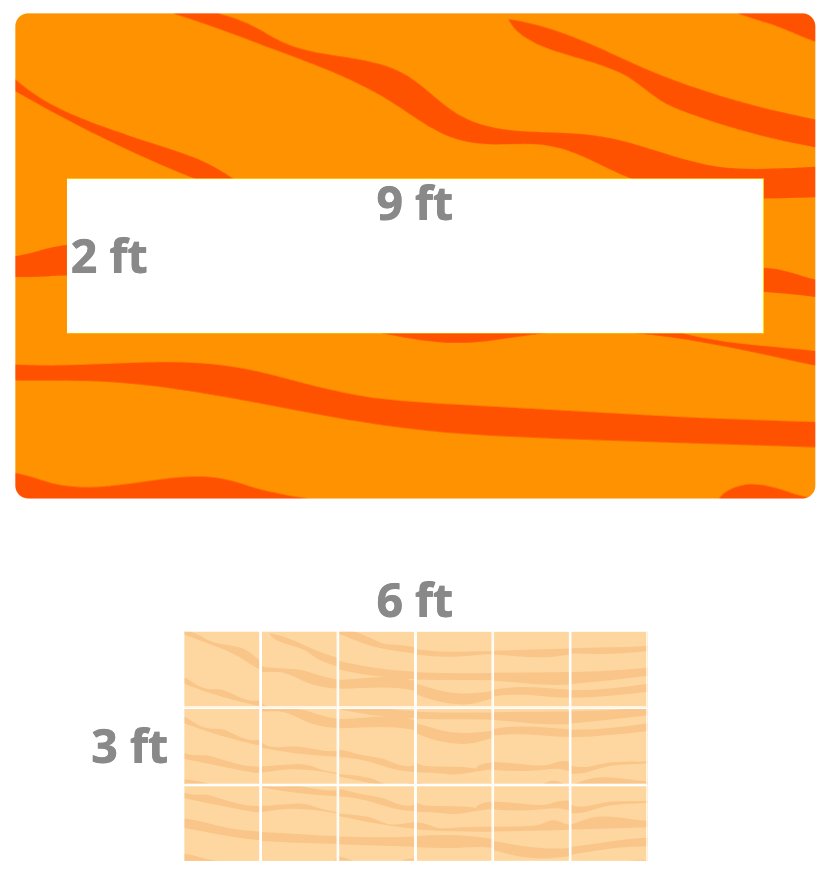
It is possible to cut a 3x6 slab into two pieces so that when re-arranged they can neatly fit into the 2x9 hole. Can you do that?
Eight 8's to a Thousand
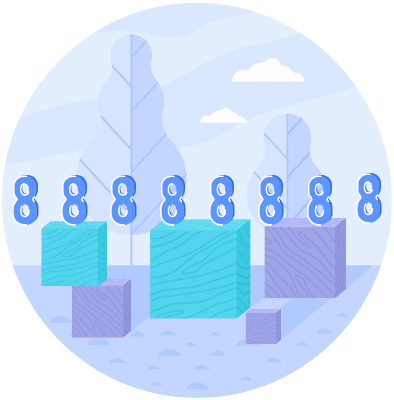
How can you add eight 8's to make 1,000? How many pluses would you use for this?
Four 4's Into Seven

Using four 4's and basic math operations (addition, subtraction, multiplication, and division), reach number 7. NOTE: you are not allowed to combine digits.
Parking Lot Conundrum
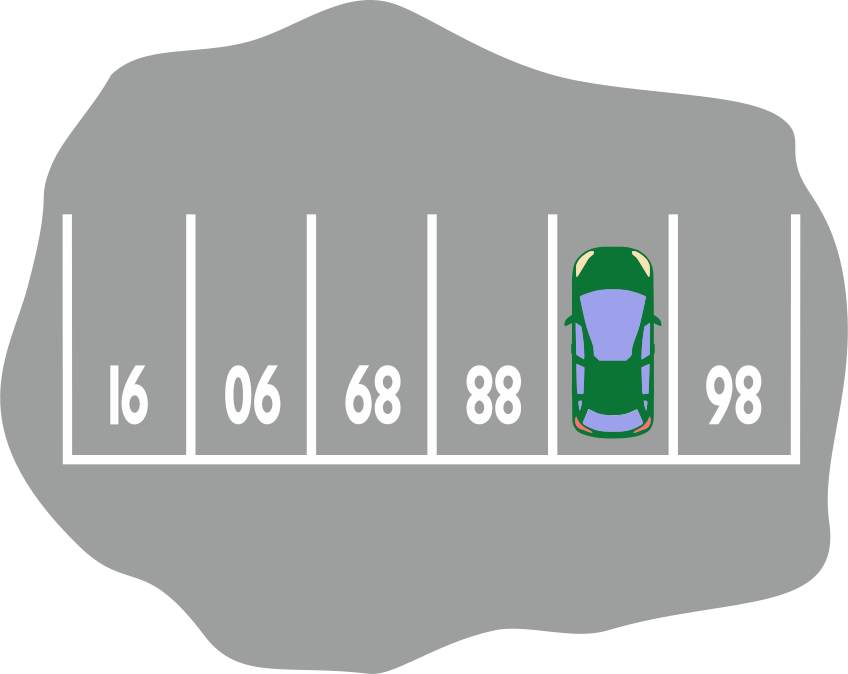
Which numbered space is the car parked in?
Four Intersecting Squares

How many squares are in this shape?
Biggest Cross-out
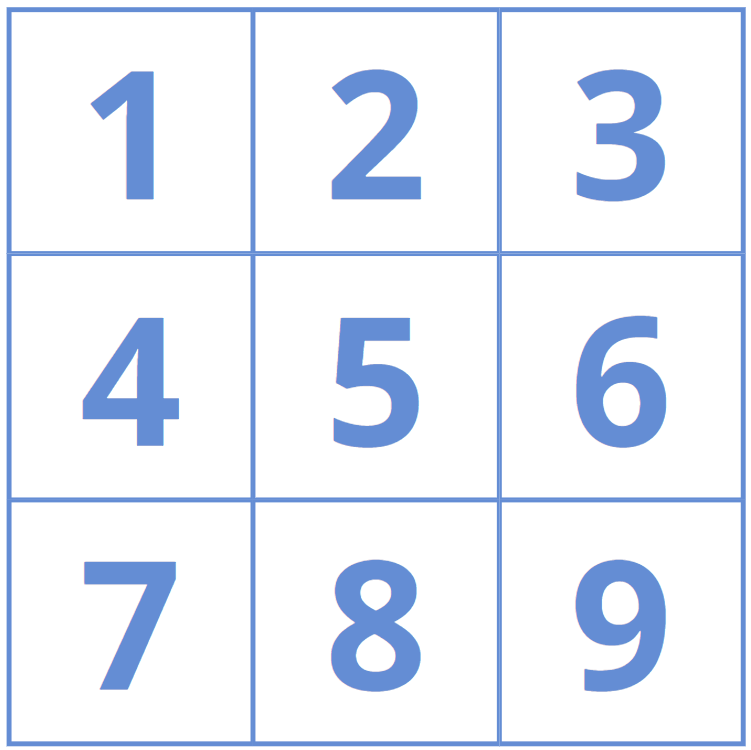
Draw a straight line which would cross out a series of cells with the highest total of numbers in them. Start by pressing and dragging from any cell.